The Indoor Air Crisis
While Dubai's outdoor air quality makes headlines, the air inside your home or office can be 2-5 times more polluted than outdoor air. Between construction dust, HVAC systems, and sealed buildings, indoor air quality is a serious but overlooked health risk.
The EPA ranks indoor air pollution among the top 5 environmental health risks. In Dubai's climate, where we spend up to 95% of our time in air-conditioned spaces, this becomes even more critical.
"We spend nearly 90% of our time indoors. If the air we breathe is stagnant or contaminated, our health and cognitive performance suffer directly."
More polluted than outdoor air
Of time spent indoors
AQI "Unhealthy" days/year
HEPA particle capture rate
Common Indoor Pollutants in Dubai
Particulate Matter (PM2.5/PM10)
PM2.5 and PM10 particles from desert sand and construction that penetrate deep into your lungs.
VOCs (Volatile Organic Compounds)
Chemical gases from paints, furniture, and cleaning products that accumulate in sealed buildings.
Mold & Bioaerosols
Often hidden in AC ducts due to condensation and poor maintenance in humid conditions.
CO2 Buildup
Stagnant air leads to high CO2 levels, causing headaches, fatigue, and reduced productivity.
Health Impacts of Poor Indoor Air
Short-Term Effects
- • Headaches and fatigue
- • Eye, nose, and throat irritation
- • Difficulty concentrating
- • Allergic reactions
Long-Term Effects
- • Respiratory diseases (asthma, COPD)
- • Heart disease and stroke
- • Lung cancer risk increase
- • Neurological effects
Understanding HEPA Filtration
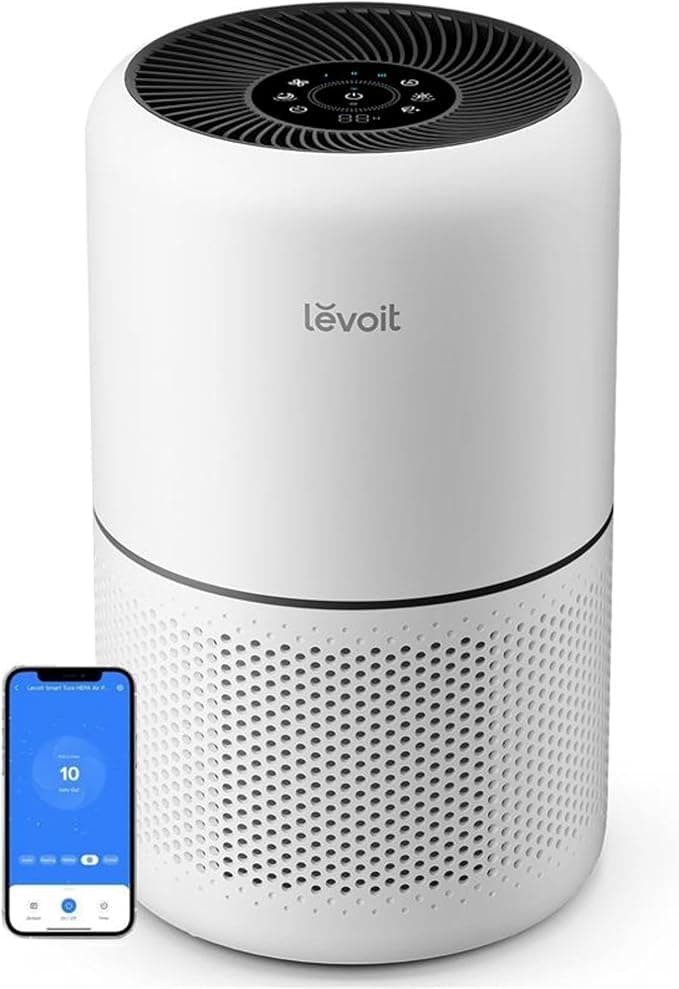
True HEPA filters capture 99.97% of particles as small as 0.3 microns. In Dubai, an air purifier with both HEPA and Activated Carbon is essential.
Improving Your Air Quality
Place a True HEPA purifier in bedrooms and home offices. Look for models with CADR (Clean Air Delivery Rate) appropriate for your room size.
Replace AC filters every 1-3 months. Schedule professional duct cleaning annually. Consider upgrading to high-efficiency filters.
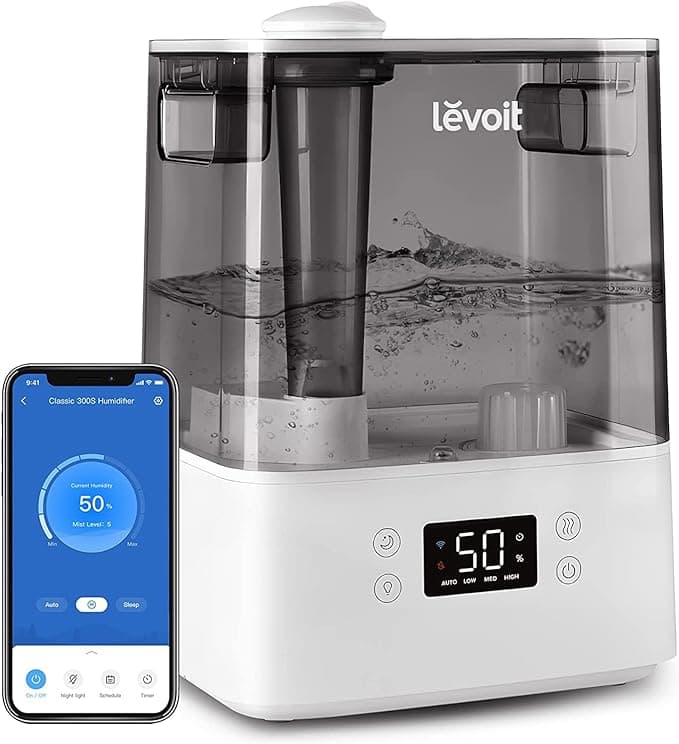
Maintain 40-50% humidity to prevent mold growth while avoiding respiratory irritation from overly dry air.
Choose low-VOC paints and furnishings. Avoid synthetic air fresheners. Use natural cleaning products when possible.
During cooler months (November-March), open windows in early morning when outdoor AQI is lower to flush out stale indoor air.
Room-by-Room Priority
Bedroom (Priority #1)
You spend 8 hours here daily. Use a quiet purifier with sleep mode. Keep humidity at 45-50%.
Home Office (Priority #2)
CO2 buildup affects concentration. A small HEPA purifier improves focus and reduces fatigue.
Kitchen (Priority #3)
Cooking produces PM2.5 and VOCs. Use range hood and consider air purifier with carbon filter.